

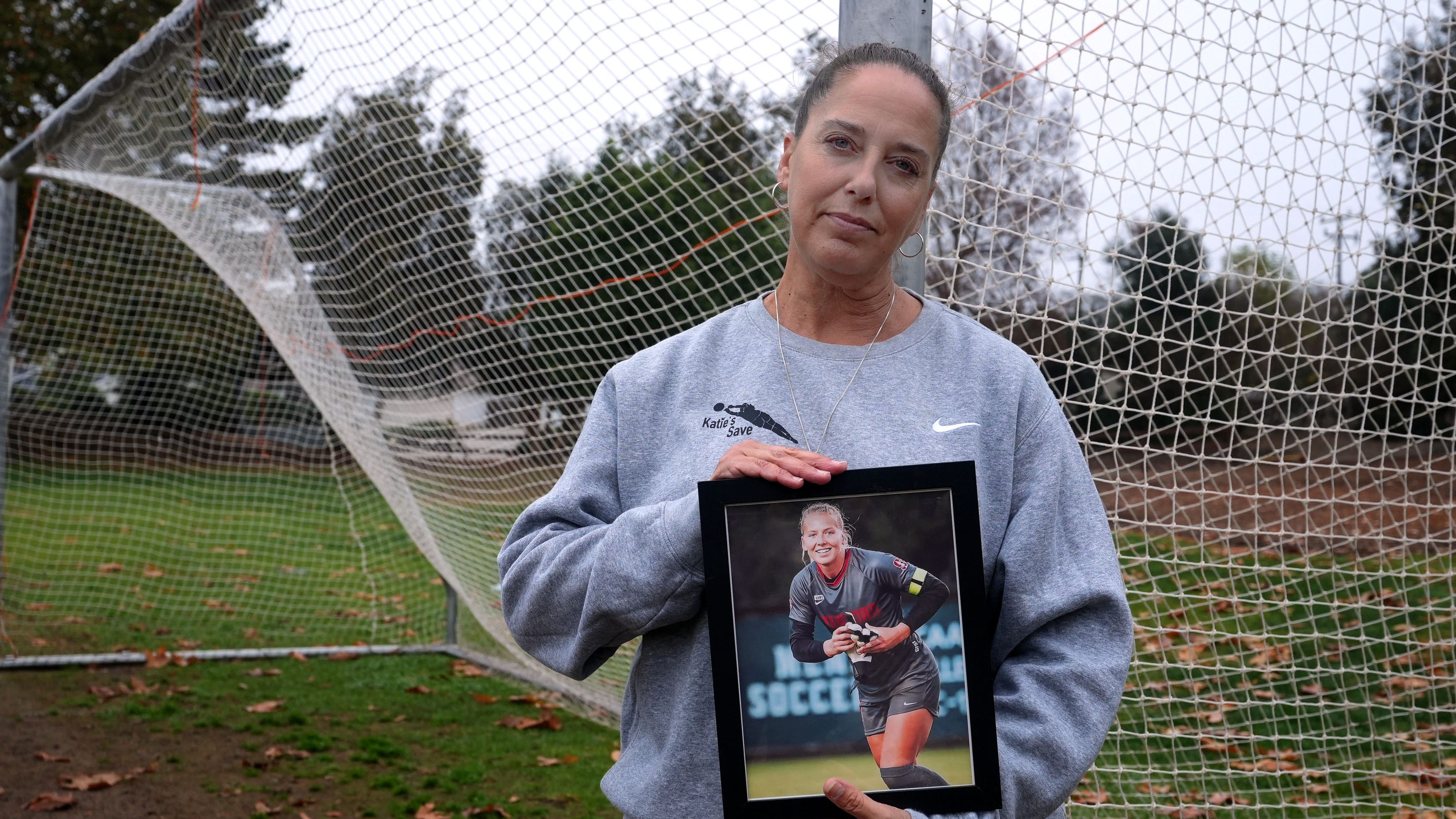

Gina Meyer named among USA TODAY’s Women of the Year for California
Gina Meyer, who created Katie’s Save to help parents and loved ones recognize potential struggles college students face, is one of USA TODAY’s Women of the Year.
Ventura County Behavioral Health Director Loretta Denering shed tears of joy as she announced the prize from the first round of funding from Proposition 1.
Rattling off the numbers down to the penny, Denering told the Ventura County Board of Supervisors in May that two critically needed mental health facilities would get $93.76 million from the $3.3 billion in proceeds. California voters narrowly passed the measure in March 2024 to provide money for mental health treatment facilities and housing in the state grappling with homelessness.
One of the local projects is a 38-bed rehabilitation center near Camarillo for patients with disabling mental illnesses such as schizophrenia and the other a 16-bed inpatient psychiatric facility in Simi Valley. Officials expect the projects will lessen the number of patients who are taken out of county for care because there are too few spots for them in local facilities.
The inpatient psychiatric facility is reportedly the first in the East County since one operated by the Simi Valley Adventist hospital system closed in 2005. It would increase the number of inpatient beds from 43 to 59 countywide, not including those at private Vista del Mar.
The rehabilitation center will be a locked facility where people living under conservatorships can receive therapy, medication management and help with social and job skills among other offerings. Individuals often are admitted after being discharged from a psychiatric hospital. They may stay for up to two years and then go on to a more independent and unlocked living situation.
“We are so fortunate to be able to bring these much-needed services to our community and bring those who are away home,” Denering told the board. “We have a lot of work to do and we’re ready.”
The projects must be open and operating by 2030 under terms of the funding.
Officials say Ventura County faced significant competition with more than $8 billion in requests submitted statewide for the $3.3 billion. Statewide, the 124 awards went to nonprofit and for-profit corporations, tribal entities, cities and counties including Ventura.
“To get both of these projects, it’s a huge win for the county,” said Clay McCarter, a program management analyst in the County Executive’s Office who wrote the grant application.
McCarter said the county got all of the $34.8 million requested to build the inpatient facility in Simi Valley and $59 million of the $71 million sought for the rehabilitation center off Lewis Road. The latter facility is being constructed through a renovation of the former RAIN homeless center.
McCarter said the remaining $12 million was requested for ancillary projects to support the center, including a small market, farm and community center.
“We are looking for alternative sources of funding to build them,” he said, adding that the gap is not expected to affect the core project in any way.
Why they’re needed
County officials claimed heavy unmet needs in their pitch for the funding.
Family members of the mentally ill have long complained and county officials have acknowledged that Ventura County offers too few inpatient beds for people in crisis, including those in danger of harming self or others.
The inpatient facility in Simi Valley would add 16 beds to the 43 licensed beds at the Hillmont Psychiatric Center that is usually full. The figures do not include beds operated by private Vista del Mar in the Ventura area. About a third of Ventura County residents found in need of hospitalization are sent out of the county for care, while two-thirds go to Hillmont or Vista, officials said.
The Simi Valley center would be licensed as psychiatric health facility, a type of center commonly offered around the state. The small establishments provide inpatient care and people may be admitted involuntarily.
Simi Valley Police Chief Steve Shorts expects patients will be seen more quickly by qualified mental health specialists when the new facility is up and running than if they have to be taken 40 miles to Ventura.
“What we want is stabilization so they’re no longer a danger to self or others,” he said.
He also says law enforcement officers transporting and speaking with hospital staff about people they’ve detained for potential hospitalization would spend less time on the road if the treatment facility were close.
The center for rehabilitation of seriously ill patients is also sorely needed, officials said in the application.
They say the need has grown with a 90% increase over the past five years in the number of clients being overseen by conservators, up to more than 250 as of last October. While those individuals represent only a tiny percentage of the county Behavioral Health Department’s 5,000 clients, they are diagnosed with some of the most disabling mental illnesses.
More than 100 of the conserved clients are said to require a locked facility, but the only locked mental health rehabilitation center in the county offers just 16 beds, according to an excerpt of the application for Proposition 1 funding provided by county officials.
Almost 90 clients are housed at six facilities outside the county, some more than 200 miles away, leaving less time for staff and family members to see them, the application said.
Ratan Bhavnani of the Thousand Oaks area identifies. His son lives in a facility he says is very much like the type of rehabilitation center the county intends to build.
Bhavnani and his wife Nina spend up to five hours driving round trip to the facility near the Los Angeles International Airport that allows visits only on weekends and then only for an hour, he said.
The former administrator of the county’s chapter of the National Alliance on Mental Illness said strong family support is essential for recovery.
“When we meet our son regularly and share a meal, however briefly, we are able to give him a sense of connection and purpose. …We are able to observe his psychiatric and physical health and can advocate for him if necessary.”
Kathleen Wilson covers courts, mental health and local government issues for the Ventura County Star. Reach her at [email protected].
link
About the Author





:max_bytes(150000):strip_icc()/VWH-GettyImages-2157903338-69370a8ef92e449b8958c22cab26dd28.jpg "What Happens to Your Gut Health When You Eat Wild Blueberries Regularly")