
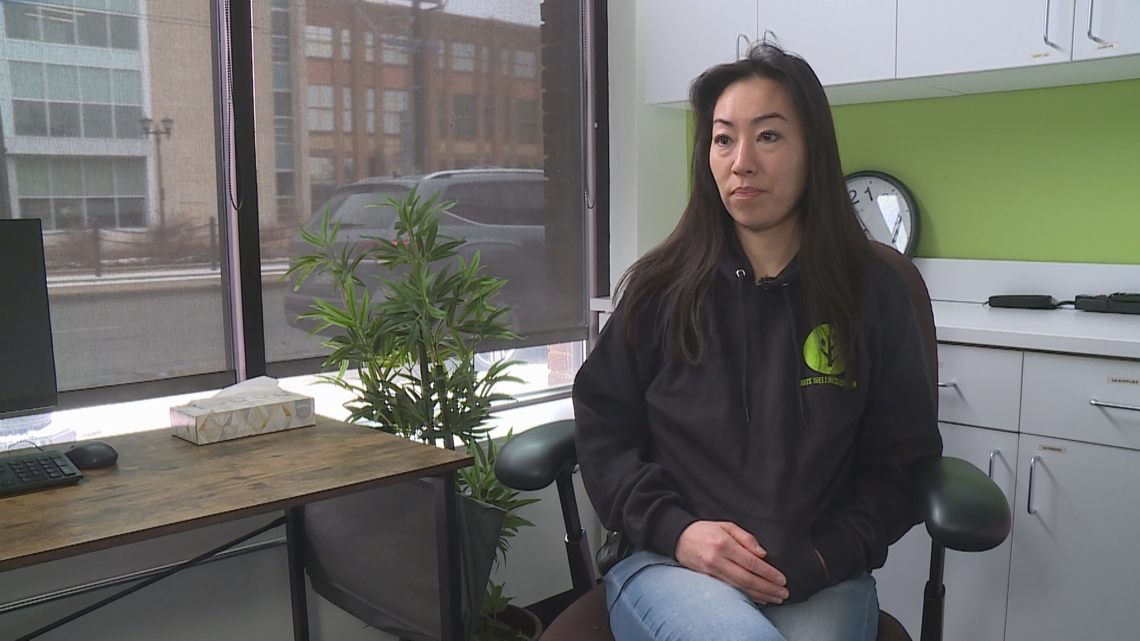
At Roots Wellness Center in Saint Paul, therapists are seeing an increasing demand for mental health services.
At Roots Wellness Center in Saint Paul, there is a growing problem.
Therapists say the increased immigration enforcement in the Twin Cities has created an increased need for mental health support, but at the same time, therapists say it has never been more challenging to address those needs.
“It’s been very difficult,” therapist Eric Silva said. “There is a lot of fear and worry about who to trust. A lot of people that I have been speaking with haven’t left their home in a month.”
Silva is one of three bilingual therapists at the center.
He says many families are scared to leave their home and that’s why the center created a rapid response therapy line to provide immediate assistance over the phone and internet.
“The hardest by far are the kids. I’m not going to lie. It’s really hard when a 7-year-old voice is speaking to you in extreme fear,” Silva says.
The center’s founder, Katy Armenariz, agrees that the calls involving children are by far the most challenging for her staff.
“We recently heard from a 7-year-old girl who has experienced her mom being taken while they were holding hands, and those calls are very emotional and hard,” Armendariz said.
To reach clients in a more secure way, Armendariz says the center has pivoted to online virtual sessions for many of its clients.
She says this decision was made after one of their clients had a scary encounter with federal agents while they were walking to their session at the center.
“She had an interaction with an ICE agent and had her phone taken. So, we did pivot to go virtual, but we are also finding that clients are struggling with online treatment,” Armendariz said.
Therapists are running into issues where clients who live in sober houses and treatment facilities are having a difficult time attending virtual sessions.
“They may be in a crowded setting, they might have roommates, and it’s putting their sobriety at risk, and we did see an impact there,” Amerendariz said.
The National Alliance on Mental Illness (NAMI) Minnesota Chapter says many other clinics and centers are also seeing an increased demand for services and resources.
Executive director Marcus Schmit says many other centers are also struggling to reach clients who are fearful of requesting help.
“We are seeing a significant increase in contacts with people who are having suicidal thoughts,” Schmit said. “There is a heightened sense of fear we have not seen in this community.”
Schmit says one example that highlights the increased demand for mental health services involves NAMI’s training sessions that focus on trauma.
Schmit says these sessions typically have enough room for 70 participants, and the sessions usually fill up after several days or weeks, but over the last month, he says these sessions have been filling up within just a few hours.
“The isolation is very real. What is happening right now is hard for many people to process,” Schmit said.
If you or someone you know is facing a mental health crisis, there is help available from the following resources:
Crisis Text Line – text “MN” to 741741 (standard data and text rates apply)
Crisis Phone Number in your Minnesota county
National Suicide Prevention Lifeline at 988, Talk to Someone Now
Throughout Minnesota call **CRISIS (**274747)
The Trevor Project at 866-488-7386
link




:max_bytes(150000):strip_icc()/VWH-GettyImages-2157903338-69370a8ef92e449b8958c22cab26dd28.jpg "What Happens to Your Gut Health When You Eat Wild Blueberries Regularly")