
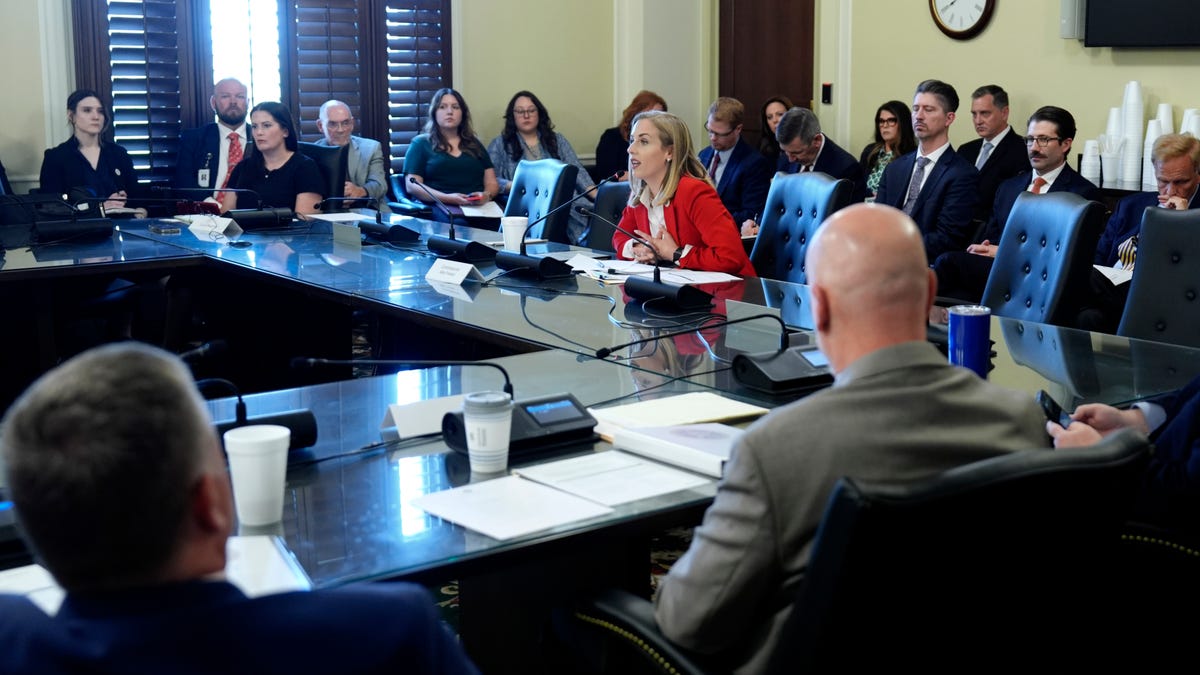
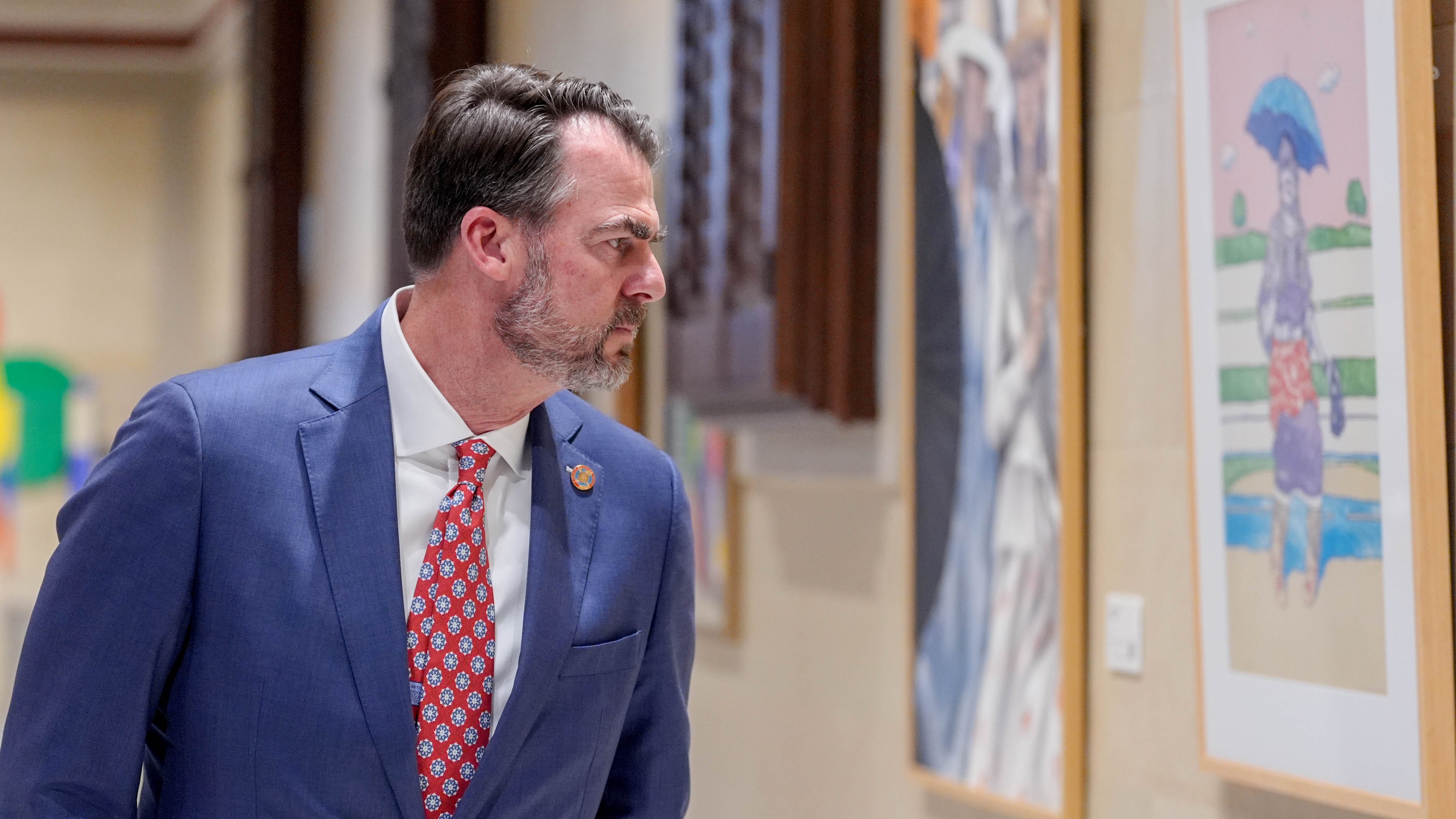

Oklahoma Gov. Stitt discusses state audit into mental health dept.
In a weekly briefing with the press, Gov. Kevin Stitt addressed protocols and reasoning behind state audit into Oklahoma’s mental health department.
Office of the Governor Kevin Stitt
Employees at the Oklahoma Department of Mental Health and Substance Abuse Services were required to sign nondisclosure agreements and discouraged from cooperating with investigators trying to uncover the roots of the agency’s financial crisis, a new state report contends.
The report issued by state Auditor and Inspector Cindy Byrd says agency leaders kept workers in the dark, skipped out on meetings, locked down an administrative floor, employed armed security guards and threatened employees during meetings. The report did not disclose any details about the alleged threats. It blamed the agency’s financial problems in part on “pressure due to the current tone at the top of the agency.”
The findings from the state auditor came on Tuesday, May 20, one day after Gov. Kevin Stitt announced the release of a different report he commissioned into the agency. That report, produced by a public accountant, found the agency had a $29.9 million budget hole and recommended the agency make several changes to improve its finances.
After the release of that report, Stitt reiterated his support for Commissioner Allie Friesen, saying she has navigated the agency’s financial issues admirably. Friesen told lawmakers in April that she inherited a “chaotic” agency. In May, she said it demoralizes the agency’s workforce when the rhetoric shifts to blame those “brave enough to confront years of likely fraudulent and grossly unethical behavior.”
When asked about Byrd’s report, a spokesperson for the agency said it is under review. Maria Chaverri, the department’s communications coordinator, said agency officials had created a large table of diverse external experts to help shed light and end “years of corruption.”
“We are reviewing Cindy Byrd’s document, and we look forward to the additional contributions from third party investigators and financial auditors in the coming months,” Chaverri said in a statement.
Byrd’s nine-page report was critical of the department’s leadership, though it did not mention Friesen by name. Byrd said the report looks into the short-term needs of the agency, adding that it’s not the final investigative audit.
How much money does Oklahoma’s mental health agency need?
The report landed two weeks after Stitt requested the audit, citing concerns about potential long-term patterns of financial mismanagement at the mental health agency.
Lawmakers and other state officials have been trying to figure out how the agency’s financial crunch became so severe that it is about to run out of funding. The agency needs more money to make it through fiscal year 2025, which ends in June, and the amount it needs to stay afloat keeps changing.
The state auditor’s report found that the agency needs $28.7 million. It lists several factors for the financial disarray, including that management:
- Failed to tell employees about internal events that employees then learned about through the news.
- Changed supervisory structures, leading to employees being unaware of who their supervisor is and having to find out online.
The report also cites the governor’s request for agencies to maintain a flat budget as impacting the mental health department’s budget request, along with the agency’s difficulty explaining “misunderstood” needs related to topics like Medicaid growth and payments for pending reimbursement claims.
The report says the agency used $9.4 million of fiscal year 2025 funds for 2024 expenses, leaving it to start the current year in a deficit. It blames the increased state match amount for Medicaid, along with “questionable past spending” — listing as examples the purchases of Narcan vending machines, the 988 help line’s promotional costs and the paused Donahue Behavioral Health campus construction project.
The agency’s financial issues grew along with its spending, the report found, including a 204% increase between 2018 and 2024 for professional services expenses. Additionally, overall payroll costs increased by 49% over the same time period.
The report found that between January 2024, when Friesen was appointed by Stitt, and April 2025, 38 people were hired with salaries of at least $100,000, including 21 executive positions and 17 medical positions. There were also 376 pay raises greater than 10% in the same time period, amounting to an annual rate of $4,073,948, according to the report.
The mental health agency also did not budget for $4.2 million in Medicaid recoupments as staffers were not aware in advance that they were coming, according to the report.
The transition to managed care resulted in several changes to processes at the mental health department, according to the report, causing a lag in both billing and payments after implementation began in April 2024.
Byrd’s report includes preliminary recommendations for the agency, including hiring a qualified chief financial officer with state government experience and scrutinizing recent and ongoing terminations to ensure they are not retaliatory.
The report that Stitt announced on Tuesday, May 20, was produced by public accountant David Greenwell and also called for a chief financial officer at the agency, along with increasing transparency through dashboards and public reporting. The accountant also recommended that the agency adopt a streamlined software accounting system, review indirect expenses and update ethical guidelines.
Oklahoma lawmakers consider one-time appropriation to mental health agency
The department is set to receive a supplemental payment of about $31.4 million from the state to stay afloat until the next fiscal year. House Bill 2766, the general appropriations bill, will be heard on the Senate floor later this week and would appropriate $27.4 million to the mental health department for payroll. The bill would also redesignate $4.1 million for payroll from the funds appropriated to the agency last year.
The funding is part of the Legislature’s plan to stop the bleeding at the agency, said Rep. Trey Caldwell, R-Faxon, last week when lawmakers announced the state’s proposed budget for 2026.
The Legislature would potentially follow up the emergency one-time appropriation with another infusion of money at the beginning of the next legislative session, Caldwell added. That money would be on top of the agency’s $403 million proposed budget for 2026.
Read the full report
If you are unable to view the report below, click here.
link
About the Author





:max_bytes(150000):strip_icc()/VWH-GettyImages-2157903338-69370a8ef92e449b8958c22cab26dd28.jpg "What Happens to Your Gut Health When You Eat Wild Blueberries Regularly")