
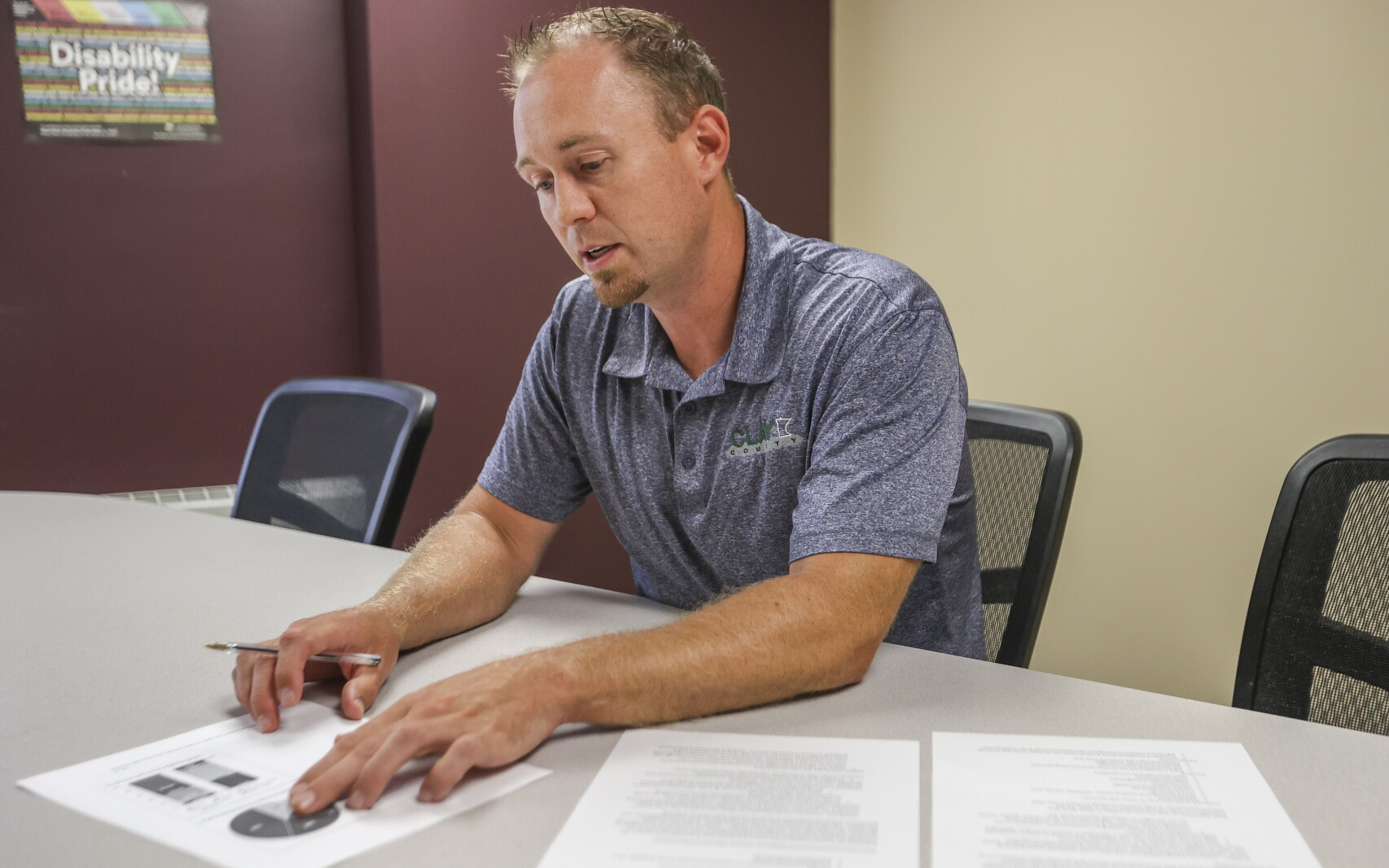
MOORHEAD — A Medicaid administrator and mental health care provider are beginning to plan for the potential impacts of federal changes to the health insurance program.
Clay County Director of Social Services Quinn Jaeger said his department could see administrative costs for Medicaid at least double in the coming years as new eligibility verification measures for the program go into effect.
Those same changes could put up extra barriers for Medicaid enrollees, reducing the number of people with health insurance, Jaeger said.
“That’s what I’m the most worried about,” Jaeger said.
The changes are outlined in the
recently passed federal spending and tax bill,
signed into law July 4. Dubbed the “big beautiful bill” by its Republican proponents, the law introduces new eligibility requirements for Medicaid recipients. Medicaid is a joint federal-state insurance program for people with low incomes.
The law increases the frequency of Medicaid eligibility renewals from every 12 months to every six months. It introduces a work requirement of at least 80 hours per month for people ages 19-64. Some adults are exempt from work requirements, including people with disabilities and parents of children ages 13 or younger. Changes have various implementation dates, ranging from 2027 to 2029.
Proponents of the law say the changes will cut down on waste, fraud and abuse in the Medicaid program.
In Minnesota, Medicaid goes by the name Medical Assistance. The state government sets eligibility criteria, while counties are tasked with administering Medicaid.
Along with trips to the doctor and hospital, Medicaid also pays for things such as long term care, home health care, dental care, substance use disorder treatment and eyeglasses.
In Clay County, more than 16,000 people are enrolled in Medicaid, Jaeger said, making up 24.4% of people in the county.
At present, the Clay County Social Services health care team has 13 employees who verify Medicaid eligibility.
“Our 13 eligibility staff are incredibly busy on any given day with all the different paperwork and documents and verifications that they’re doing, and that’s just with one-year renewals as it is right now,” Jaeger said.
By Jaeger’s preliminary estimate, additional eligibility verification would at least double the amount of work staff need to do, requiring additional staffing. A simple doubling of the Clay County staff would cost around $950,000 more per year. Depending on how the state changes its policies, he estimates Medicaid administrative costs for the county could grow by $1.24 million per year.
A spokesperson for the Minnesota Department of Human Services declined an interview, saying the department has not yet finalized its analysis of the bill’s impact on Minnesota.
The current eligibility requirements do a good job of filtering out people who do not qualify for Medicaid, Jaeger said. He is concerned the increased checks and verification measures will mean fewer people have health coverage.
“It’s not necessarily going to make the medical needs go away for these folks,” Jaeger said. “It’s simply going to eliminate their health care coverage, which is going to be incredibly expensive for them.”
Lakeland Mental Health Center CEO Donna Baker echoed Jaeger’s concerns about people’s ability to access Medicaid. Lakeland provides mental health care for 7,500-8,000 people across Clay, Becker, Otter Tail, Douglas, Pope and Grant counties. Of the total number of clients, 60% pay for services with Medicaid.
In Clay County alone, Lakeland has more than 2,000 clients, including 1,700 enrolled in Medicaid.
Along with services like therapy and psychiatry, Lakeland also provides medication management, a 24/7 crisis response program, case managers and community and school based services.
Baker said she is concerned that with the increased frequency of eligibility checks, some clients will miss a notice about renewing their eligibility and be left without any kind of medical care.
“And with that eligibility projected to go out not annually, but twice a year, that’s a heavy lift for some of our clients, to complete that paperwork to remain enrolled,” Baker said.
Without the health care that clients need, other aspects of their lives like work, housing and food security could be affected, Baker said.
At present, 49% of Lakeland’s income comes from Medicaid products. The impact of Medicaid changes for Lakeland will become clearer as the state determines its response to the changes, Baker said.
link





:max_bytes(150000):strip_icc()/VWH-GettyImages-2157903338-69370a8ef92e449b8958c22cab26dd28.jpg "What Happens to Your Gut Health When You Eat Wild Blueberries Regularly")